There is a particular kind of love that fits inside a box.
You know the ritual. You start weeks before your flight, or weeks before you hand it off to the cargo forwarder. You walk the aisles of Costco or Woolworths or Tesco with a list in your head. Not written down, because you've memorized it from years of doing this. Spam. Vienna sausage. The big can of corned beef. Toblerone, because your nephew likes the mountain shape. Pond's cold cream for your mother. Pantene shampoo in the enormous bottle, because it's cheaper here. Johnson's baby powder. Hershey's. M&Ms.
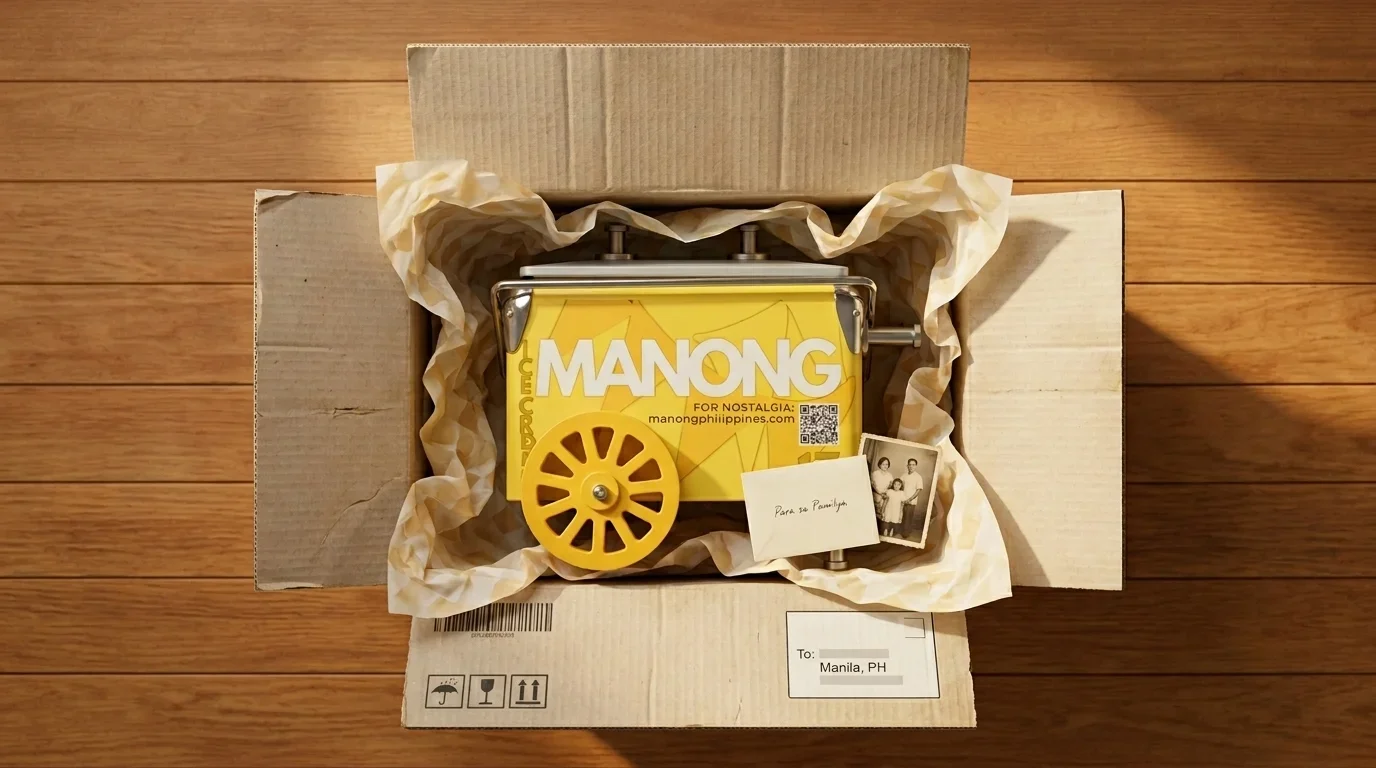
You pack the box like you're solving a puzzle, turning things sideways, filling gaps with socks and underwear and the small bottles of lotion you collected from hotel bathrooms. You tape it closed with the seriousness of someone sealing something important. Because it is important. The balikbayan box is one of the most honest love languages our culture has ever invented. It says: I thought of you. I carried you with me, even here.
But there comes a point, and if you've been away long enough, you know this point, when the box stops feeling like enough.
When Things Are Not the Thing
It's not that the people back home don't appreciate the Spam. They do. It's not that the gesture stops being meaningful. It never does. But somewhere between your third or fifth or tenth year of packing boxes, a quiet question surfaces. Your mother already has cold cream. Your sister's children have more chocolate than they should. The people you love have what they need. What they don't have is you.
And you can't fit yourself in the box.
So what do you give when you want to give something that isn't just useful? When you want to give something that says not just I thought of you but I know you? When the person on the other end has everything except the one thing distance has taken: proximity to what they came from, to who they were before the years and the city and the career reshaped them?
This is the gap that consumable gifts cannot cross. The Toblerone is eaten. The shampoo runs out. The lotion disappears into skin and leaves no trace. There's nothing wrong with any of that. But sometimes what you want to give is permanence. A thing that stays. A thing that holds.
The best Filipino gifts for people who carry their culture quietly are not the things that get used up. They're the things that get placed somewhere and looked at. That sit on a shelf or a table or a windowsill and do their quiet work of remembering.
Objects That Hold Memory
Think of the gifts that have lasted in your own life. Not the expensive ones, necessarily. The ones that are still there, years later, that you'd reach for first in a fire. Chances are, they're objects that point somewhere. To a person. To a place. To a version of yourself that still lives in the past, waiting to be visited.
That's the kind of gift worth crossing an ocean with.
A hand-carved capiz shell lamp or candle holder, the kind made by craftsmen in Cebu or Cavite who learned the work from their fathers, does something that no imported item can replicate. When you light it, the shell goes translucent, the way it does at certain hours on the beach at dusk, and the room fills with something that isn't quite light and isn't quite memory but is somewhere between both. It is Filipino craftsmanship at its most quietly beautiful. It doesn't announce itself. It simply glows, and something in you recognizes it.
There is a similar quality to a hand-woven abaca or pina cloth table runner, the kind that takes days to produce and bears, in its texture, the record of the hands that made it. Pina cloth was once worn by ilustrados, by people who understood that the most refined things are often the most understated. A runner like this on a dining table in Toronto or Sydney or London is not decoration. It is a statement of where you come from, made without a single word.
For the person who cooks, and most Filipinos of a certain generation cook because the kitchen is where the culture lives, a handmade wooden mold for kutsinta or puto carries a different kind of memory. It is the weight of a grandmother's hands. It is Sunday mornings before mass, the smell of steam, the way the molds left their shapes in soft rice flour and the shapes came out perfect every time because she had done it a thousand times. You cannot buy that memory. But you can give an object that opens the door to it.
The Cart on the Corner of Every Childhood
And then there is the sorbetes cart.
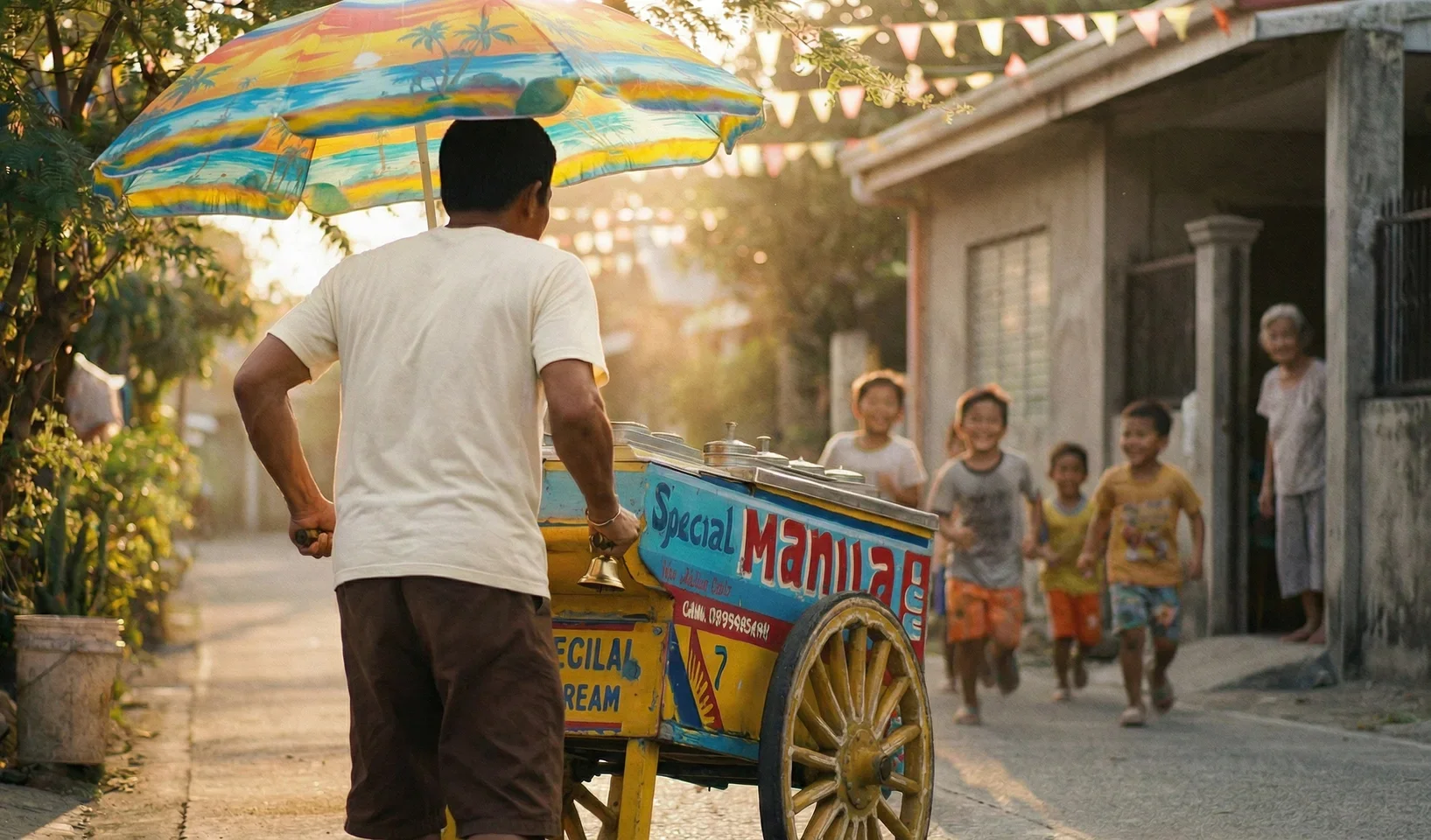
If you grew up in the Philippines, you don't need it explained. You already hear it: that particular bell, hand-rung by the manong on his painted cart, the sound traveling down a quiet street in the late afternoon heat. You already feel the twenty-peso coin, warm from your pocket. You already taste it. The coconut, the cheese, the purple ube, stuffed into a cone or a bread bun in that distinctly Filipino way that no other country in the world has thought to do.
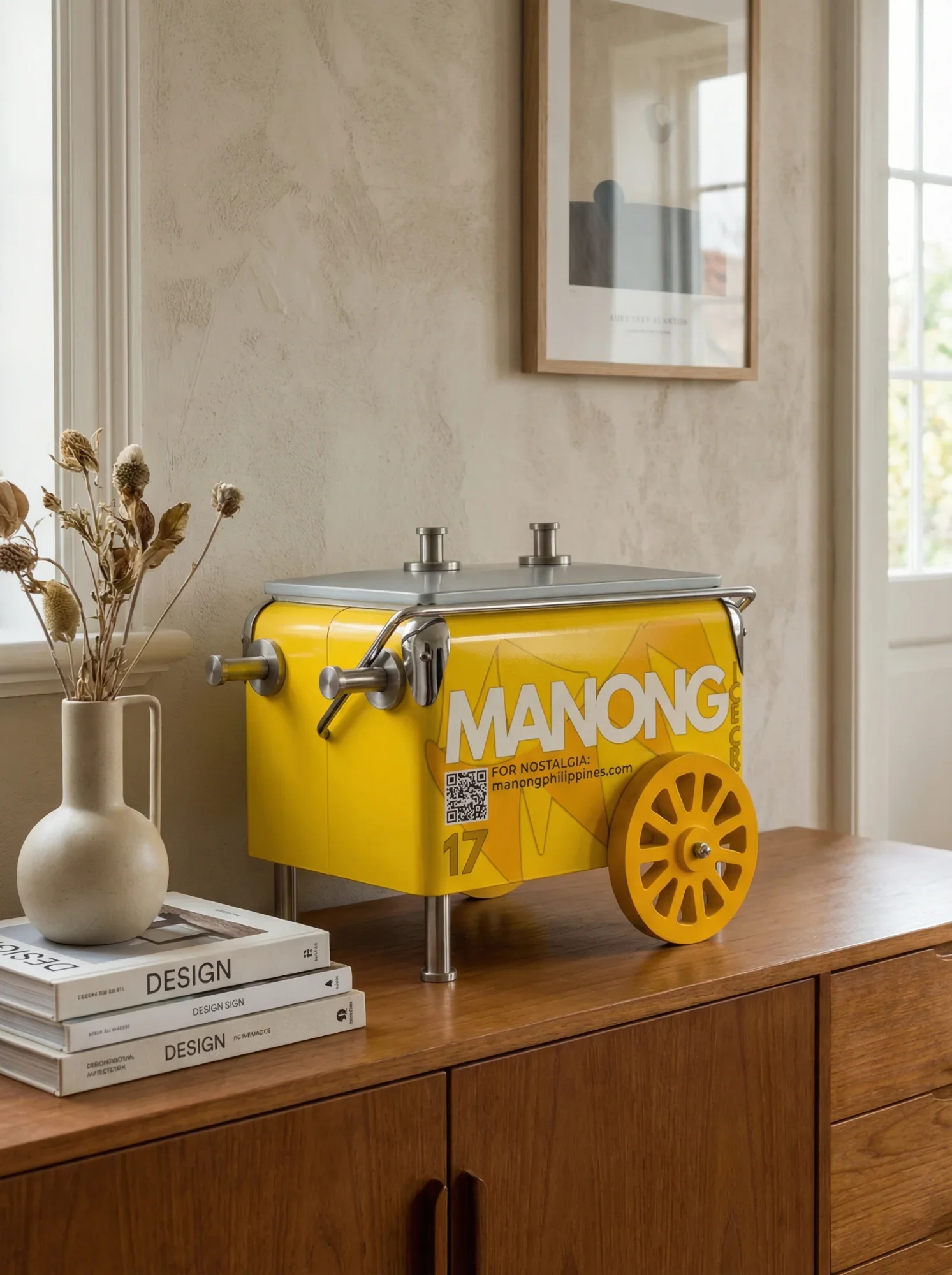
The Manong Mini Sorbetes Cart is a scale model of that memory. Cast in careful detail, the painted wood, the canister lids, the proportions of a cart you have seen a hundred times and perhaps not thought of in years. It is small enough to sit on a desk or a bookshelf. It does not play sounds. It does not need to. The memory supplies everything the object withholds.
What makes it work as a meaningful gift for a Filipino is not the craftsmanship alone, though the craftsmanship is there. It is the specificity. This object is not trying to represent "the Philippines" in the broad, tourist-facing way. No jeepney keychains, no neon roosters. It represents one particular, precise thing: a childhood afternoon. A sound. A transaction that was also a small joy. It is the difference between a postcard of a city and a photograph of your street.
Placed on someone's shelf in a flat in London or a house in New Jersey, it does what the best objects do. It stops people. They look at it and they know, without being told, what it is and where it comes from. And the Filipino who owns it feels, for a moment, seen.
Books and Tastes That Carry a Country
A beautifully produced Filipino coffee table book, one of the serious ones that approaches the archipelago as the photographers and historians do, with the gravity its complexity deserves, belongs on any list of unique Filipino gifts because it asks something of the recipient. It says: look at this with your full attention. Look at what we come from. The photography, the essays, the texture of the pages are a form of cultural witness. It is the kind of gift that someone abroad keeps for decades.
And for those who want to give something tasted rather than displayed, a bottle of premium artisan calamansi vinegar or coconut cane vinegar from a small Philippine producer is the pasalubong reimagined. Not the plastic jug of Datu Puti, beloved as that is. The version made in small batches, in the province, by people who understand that the best version of a Filipino staple deserves the same care we give to anything we call artisanal. On a dining table in another country, it is the taste of home without the performance of nostalgia.
What a Gift Is Really Saying
The Filipino professionals living abroad who give these kinds of OFW gifts are not giving products. They are giving recognition.
That is what separates a meaningful gift from a useful one. The useful gift says: I want your life to be easier. The meaningful gift says something harder to articulate but more necessary to hear. I see where you come from. I honor it. I know that the distance between who you are now and the child on that street with the twenty-peso coin is both very great and very small.
The person receiving a gift like this, the Filipino mom who has lived in her adopted country long enough to have a favorite coffee shop there, to know the bus schedules, to have built a life, does not need more things. What she sometimes needs is to be reminded that the things she carries from home are worth carrying. That they are not embarrassments or remnants from a simpler life. That they are, in fact, the source of the particular warmth that everyone around her keeps noticing without knowing what to call it.
A gift for a Filipino that understands this does more than sit on a shelf. It gives permission. Permission to remember. Permission to miss. Permission to be from somewhere, fully and without apology.
Not What Fills the Box
The balikbayan box is not going anywhere. It is one of the most beautiful things about us: this refusal to let distance dissolve the obligation of care, this insistence on sending something physical across the water as proof that we have not forgotten. It will keep being packed, taped, and tracked across oceans, and every item inside it will be received exactly as it is sent. With love.
But alongside it, or instead of it, or as the thing that travels separately in a suitcase wrapped in a shirt for protection, there is room for a different kind of giving. The kind where the object outlasts the occasion. Where years from now, someone in a city far from home glances at a shelf and is transported, briefly and completely, to a street they grew up on. To a sound they didn't know they still carried.
The best pasalubong is not what fills the box.
It's what fills the room with memory.